RAGDOLL BEASTS Maps & Arenas
Read every ledge, rooftop, and prop spawn before you throw — or get thrown — off the map.
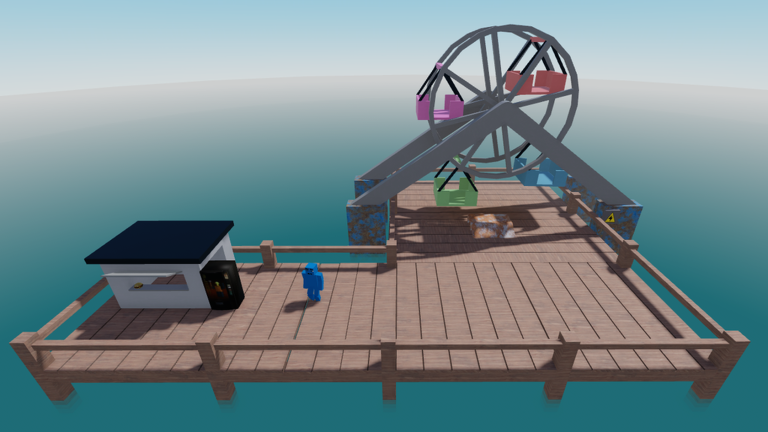
Map knowledge is the silent skill gap in RAGDOLL BEASTS. Two players with identical punch timing will still diverge hard when one understands edges, rooftops, and prop lanes and the other treats every arena like a flat boxing ring. This guide covers arena awareness for the Roblox ragdoll fighter by skulltrident: how to scout layouts in a 10-player lobby, where ledges punish greed, how city-style maps create vertical fights, and why hammers and crates are part of the terrain — not decoration.
Because the experience is still in testing, individual map props and collision quirks can shift after a publish. The principles below survive most tweaks: respect lethal edges, fight for high ground on purpose, and never stand in a heavy object’s swing path. Cross-check Updates after long breaks.
Arena awareness in the first 20 seconds
When you load in, do not sprint at the nearest silhouette. Spend the opening beats on a mental sketch:
- Where are the voids? Count open edges, pits, and drop-offs you can finish throws into.
- Where is high ground? Rooftops, stacked crates, raised plazas, and climbable lips change who controls camera angles.
- Where are the loud props? Hammers, crates, and other heavy objects define danger corridors.
- Where will people pile? Mid-map choke points become third-party magnets in a ten-person server.
That sketch turns random chaos into a plan. If three fighters already clog the popular tower, take a side route instead of feeding the pile. Climbing literacy from How to Climb is how you take those side routes under pressure.
Edges and ledges: the real win condition
The developer loop is blunt — knock opponents out, then throw them off the map. Edges are therefore scoring zones, not scenery.
- Prefer throws aimed outward off the lip, not along the railing where bodies can catch geometry.
- On narrow walkways, tap punches are often safer than long grab holds; a missed grab can yeet you outward.
- When defending an edge, keep your back toward center map so a counter-grab does not auto-eliminate you.
- After you down someone near a ledge, finish with the techniques in How to Throw rather than endless ground spam that invites third parties.
Ledges also create bait. Soften a player with taps near a rim, release if they resist, climb a nearby lip, and re-engage from above. Players who only shove in straight lines are easy to read once you own vertical space.
Rooftops and high ground
City-style and multi-level arenas reward players who leave the floor. High ground gives you:
- Cleaner camera angles on heads below you
- First access to shelf-spawned props
- Escape routes when a 1v2 turns ugly
- Drop-punch setups that convert into knockouts (see How to Knock Out)
Do not camp a single popular roof if half the lobby is already contesting it. Side roofs and quieter climb faces keep you alive long enough to use the height. If someone grabs your leg mid-ascent, drop with intent, re-space, and climb a different face — panic-mashing on the wall is how double knockouts happen.
City-style maps and vertical lanes
When the arena leans urban — plazas, ledges, neon blocks, stacked structures — think in lanes:
- Street / floor lane: highest traffic, most props rolling through, worst place to tunnel-vision.
- Mid ledge lane: grab duels and short throws; great for converting stuns if you keep one foot toward safety.
- Rooftop lane: lower population, higher skill expression, deadly if you get edged with nowhere to climb.
Rotate lanes on purpose. Floor players who never look up eat drop punches. Roof campers who never rotate get starved of targets and eventually collapsed on by a coordinated stack. Mix both.
Props on maps: hammers, crates, and heavy objects
Interactive objects are part of map control. Treat them like rotating turrets:
- Learn which props swing on a predictable arc versus which get kicked around by ragdolls.
- Bait opponents into the arc instead of standing beside the hinge “to use it.”
- After a prop tags a head, move in for the grab immediately — recovery windows are short.
- Never jump head-first into a spinning hammer for content during a live match.
Deep prop theory — offensive and defensive — lives on Props & Hazards. Pair that page with Combat Tips so environment reads become muscle memory.
Hazard awareness beyond the void
Community footage and live lobbies show more than clean edges:
- Fire or hazard pads on some layouts punish players who backpedal without looking.
- Stacked brawls under hanging objects create chain knockouts when one crate falls.
- Narrow bridges turn every grab into a mutual risk; sometimes the correct play is to disengage and re-peek.
If you die to the same hazard twice in one session, change your pathing before you change your punch timing. Map deaths are usually decision errors, not aim errors.
Using maps to finish eliminations
Strong players chain map features into a single elimination:
- Soften mid with taps or a crate bump.
- Drag toward a known lethal edge (How to Throw).
- If contested, climb, reset camera, and drop with a fresh head angle (How to Climb).
- Convert the wobble into a knockout and clear the lip (How to Knock Out).
That sequence beats raw button mashing because every step uses terrain. Rank the pattern against other habits on the tier list once it feels natural.
Testing-branch map caveats
RAGDOLL BEASTS remains marked as testing on Roblox. Visits sit near 9.7 million+ with active playing counts often in the 1k–2k range during peak checks, so map pools and prop placements can still iterate while the population is high. If a favorite ledge suddenly feels sticky or a hammer path changes, assume a silent publish before assuming you forgot the route. Skim Updates and re-run your 20-second scout routine.
Practice drills on public servers
Private VIP servers are not currently creatable for this experience (see the Private Servers note). Practice map sense in quieter public lobbies instead:
- One match: only call edges out loud (or in chat to yourself) — no chasing KOs.
- One match: only take high ground routes and drop engagements.
- One match: only third-party near props without standing in the swing.
Those constraints teach terrain faster than endless deathmatch autopilot.
Related reading
- Getting Started for first-hour priorities
- Controls for climb and grab bindings that unlock vertical maps
- Players for how stacks contest roofs without emptying the lobby
Read the arena first, fight second. Edges, rooftops, city ledges, and prop lanes decide more matches than raw click speed — especially while RAGDOLL BEASTS is still iterating in testing.
Frequently Asked Questions
Quick answers for RAGDOLL BEASTS players.
What should I look for when I first load into a map?
Count lethal edges, high-ground climbs, heavy prop lanes, and crowded mid chokes before you commit to a fight.
Why do rooftops matter in RAGDOLL BEASTS?
High ground improves camera angles on heads, reaches shelf props first, and gives escape routes when you are outnumbered.
Are hammers and crates part of the map or just cosmetics?
They are interactive hazards and weapons. Heavy, fast collisions to the head can knock you out — treat prop paths as terrain.
Do maps change while the game is in testing?
Yes. Layouts, props, and collision feel can shift after publishes. Re-scout edges and prop lanes after updates.